
The bathroom is one of the first places to look at when an elderly parent starts needing more help at home.
Think about everything we do there: stepping over edges, turning around in small spaces, sitting down, standing up, bending, reaching and walking on wet surfaces.
Things that seem completely normal to us can become difficult when Mom or Dad is weaker, unsteady or recovering after a hospital stay.
The aim isn't to remove their independence.
It's to create a bathroom where they can do as much as possible for themselves, as safely as possible.
Start by Walking Into the Bathroom as Mom or Dad Would
Before buying equipment, walk through their normal routine.
Start outside the bathroom.
Can they reach it safely?
Is the doorway wide enough for their walker?
Can they open the door easily?
Can they reach the light switch?
Is there enough light at night?
Then look inside.
Are there loose mats? Is the floor slippery? Is there clutter? Do they need to squeeze between the toilet, basin and shower?
Sometimes the biggest improvements cost very little.
The Toilet: Can They Sit Down and Stand Up Safely?
A toilet that was perfectly suitable before a hospital stay may suddenly be too low.
Watch how your parent sits down and gets up.
Do they drop heavily onto the seat?
Do they struggle to stand?
Do they grab the towel rail, basin or door handle for support?
If so, the bathroom may need adjusting.
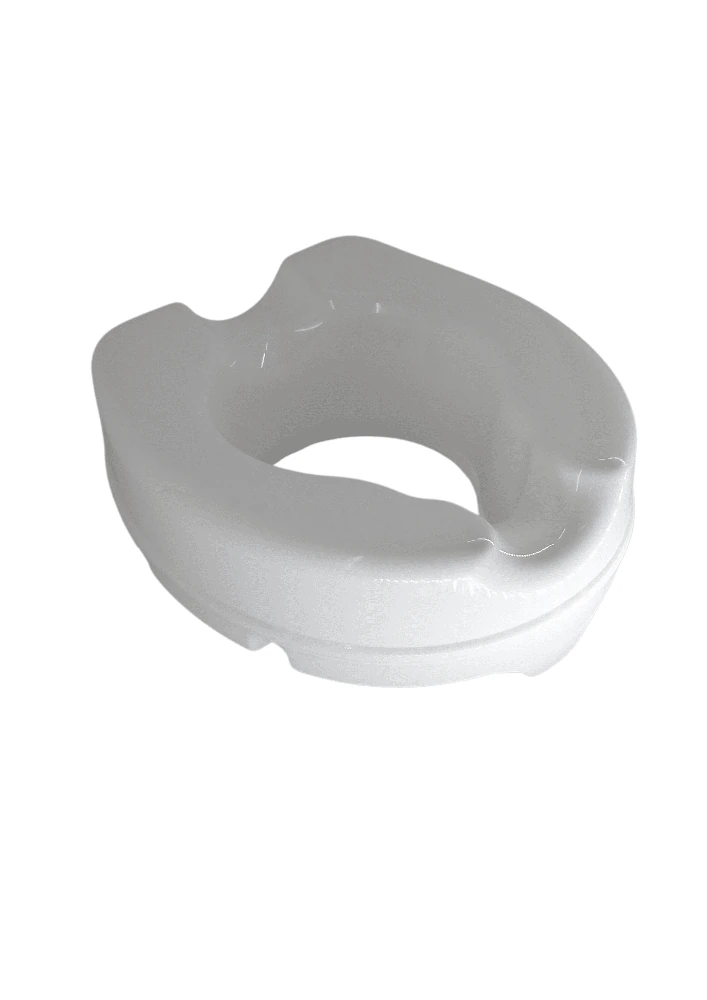
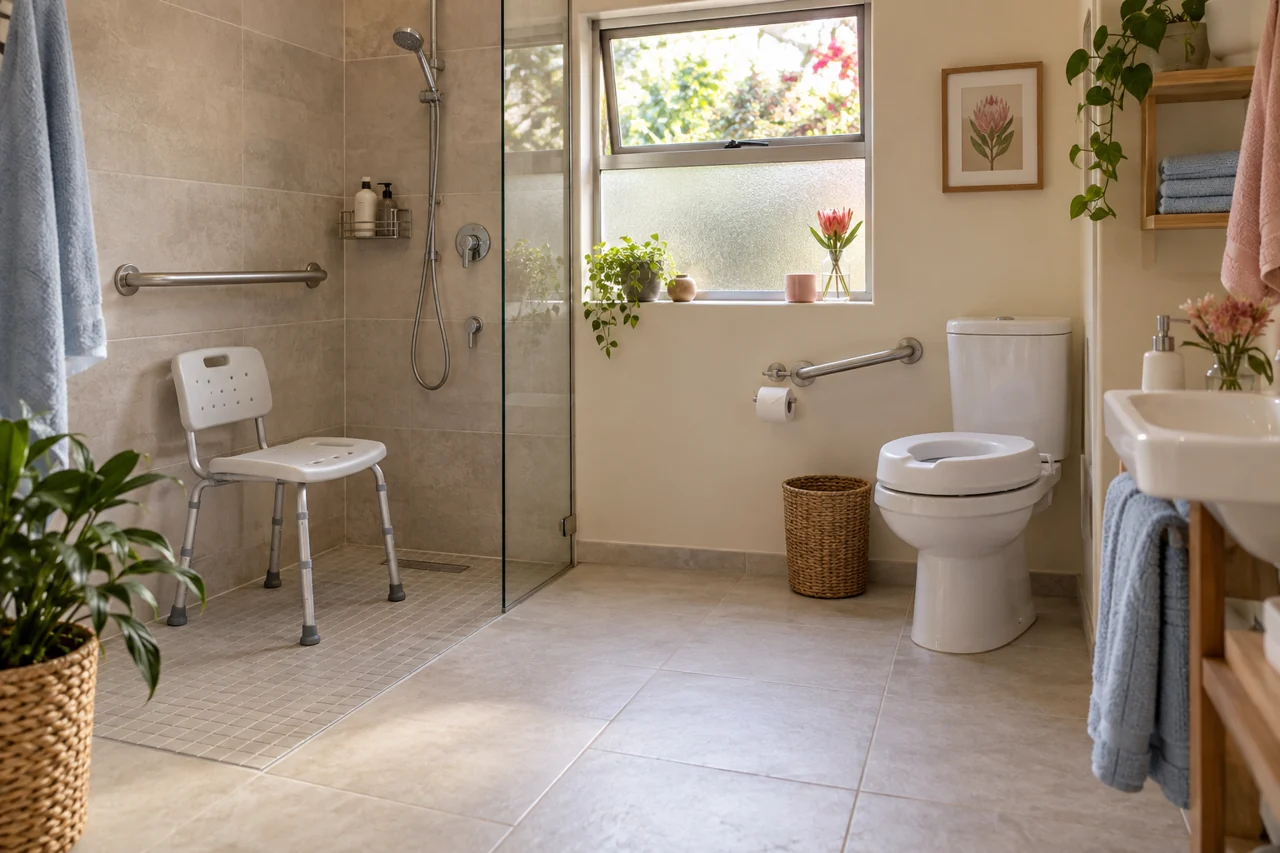
A raised toilet seat can reduce how far they need to lower themselves.
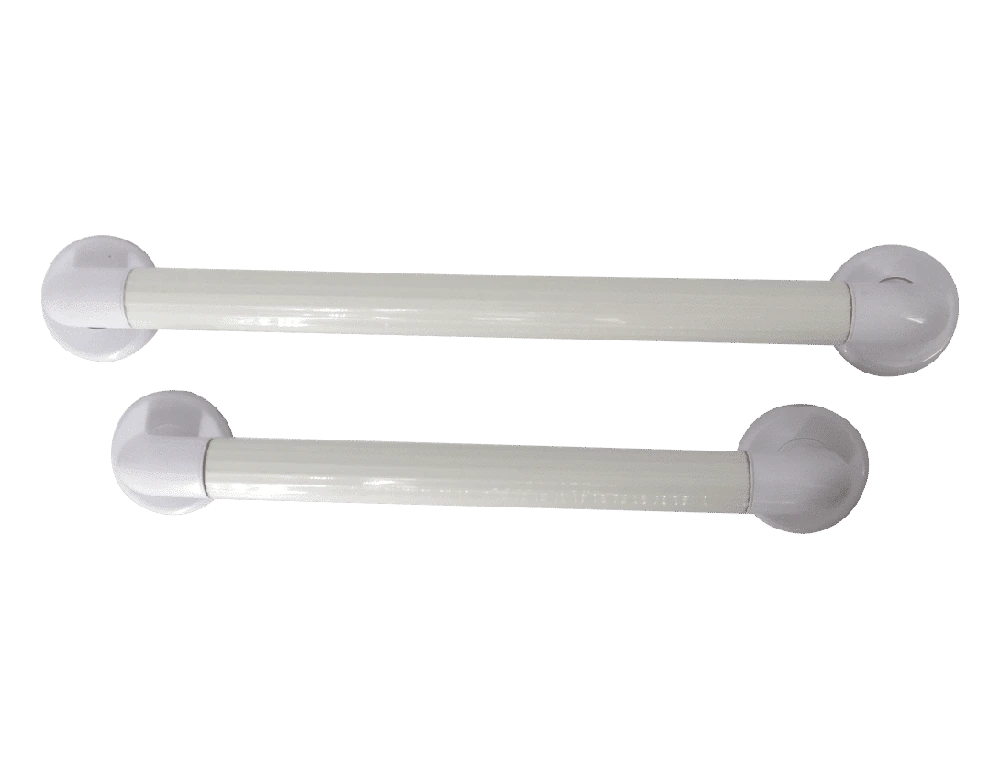
Properly installed grab rails can also give them something secure to hold while sitting and standing.
A towel rail is not a grab rail. It may come away from the wall if someone puts their full weight on it.
Make the Shower Easier
Standing for an entire shower can be tiring, particularly after illness or a hospital stay.
A shower chair can allow Mom or Dad to sit while washing.
A handheld shower head can make washing much easier while seated.
Keep soap, shampoo, a face cloth and other toiletries somewhere they can reach without bending down or stretching.
If the shower has a raised step, pay particular attention to how your parent gets in and out.
They may be able to manage the shower itself but struggle with that one step.
What About the Bath?
Getting into a bath requires stepping over the side, lowering yourself down and then getting back up again.
That can become very difficult.
Don't assume that because Dad has used the same bath for 20 years, he can still use it safely today.
If getting in or out has become difficult, consider another way of washing rather than waiting for a fall to happen.
A person's bathing routine can always be adapted.
Get Rid of Slipping Hazards
Look carefully at the floor.
Loose bathroom mats can move underneath someone's feet or catch on a walking aid.
Use appropriate non-slip surfaces where possible, particularly in the shower.
Wipe up water promptly.
Also look at footwear.
Walking around a wet bathroom in loose slippers or socks can increase the chance of slipping.
Install Grab Rails Where They Are Actually Needed
Grab rails can be extremely helpful—but only when they are positioned correctly and securely installed.
Think about where Mom or Dad naturally reaches when:
- Getting on and off the toilet
- Entering the shower
- Leaving the shower
- Standing from a shower chair
- Moving around the bathroom
Don't simply place a rail somewhere because there is an empty piece of wall.
It needs to be useful to the person using it.
If you aren't sure about positioning, ask an occupational therapist or other suitably trained professional for advice.
Think About Night-Time Bathroom Visits
The bathroom may be safe during the day and completely different at 2 a.m.
Is the route from the bed to the bathroom well lit?
Does Mom have to search for a light switch?
Does Dad rush because the toilet is far from the bedroom?
Consider nightlights along the route and in the bathroom.
Make sure the pathway is clear before everyone goes to bed.
If reaching the bathroom safely at night has become too difficult, a bedside commode may sometimes be a safer temporary option.
Put Everything Within Easy Reach
Frequently used items should be easy to reach.
Consider the position of:
- Toilet paper
- Towels
- Soap
- Shampoo
- Toothbrush and toothpaste
- Clean clothing
- Personal-care products
The less unnecessary bending, reaching and climbing, the better.
Don't Forget Privacy and Dignity
Making the bathroom safer doesn't mean taking over everything.
Ask:
“What do you still feel comfortable doing yourself?”
Perhaps Mom can wash herself but needs help getting into the shower.
Maybe Dad only needs someone nearby while he stands up.
Give help where it is needed without automatically doing everything for them.
Close doors and curtains appropriately. Keep them covered when possible. Explain before helping.
Even when someone needs significant assistance, the bathroom remains a very private space.
Prepare for Personal-Care Needs
Depending on your parent's needs, it can help to keep a small, organised supply of personal-care items in or near the bathroom.
These might include:
- Disposable pads or underwear
- Wipes
- Gloves
- Clean underwear
- Washcloths
- Towels
- Moisturiser
- Personal hygiene products
- A change of clothing
Keep everything organised and easy to reach.
This makes personal care calmer and helps protect your parent's dignity when an accident happens.
What If Mom or Dad Uses a Walker?
Don't leave the walker outside the bathroom simply because the room is small.
If your parent needs a walking aid to move safely, think about how they will use it throughout the entire journey.
Moving the walker away and telling them to “just hold onto the basin” defeats the purpose.
If their usual equipment cannot safely be used in the bathroom, the setup needs to be reconsidered.
A Five-Minute Bathroom Safety Check
Stand in Mom or Dad's bathroom today and ask:
- Can they get to the bathroom safely?
- Can they get on and off the toilet?
- Can they get into and out of the shower?
- Can they wash without standing for too long?
- Is there anything they could slip or trip on?
- Do they have something secure to hold onto?
- Can they reach what they need without bending or stretching?
- Can they use the bathroom safely at night?
If you answer “no” or “I'm not sure” to any of these questions, that's where you start.
You don't necessarily need an expensive bathroom renovation.
Sometimes a shower chair, raised toilet seat, properly fitted grab rail, better lighting and removing a loose mat can make an enormous difference.
The Goal Is Not Just to Prevent a Fall
A safe bathroom gives an elderly person something equally important:
confidence.
When Mom becomes frightened of falling, she may stop showering unless someone is with her.
When Dad struggles to get off the toilet, he may become embarrassed to ask for help.
Small changes can allow them to continue doing things for themselves.
So when you make the bathroom safer, don't only ask:
“How do we prevent a fall?”
Ask:
“What can we change so Mom or Dad can continue doing this safely for themselves?”
That is what good home care should protect:
Safety. Dignity. Confidence. Independence.
This guide supports everyday family care. It does not replace an individual assessment, diagnosis, treatment or advice from your parent’s healthcare team. For urgent concerns, seek medical help.